



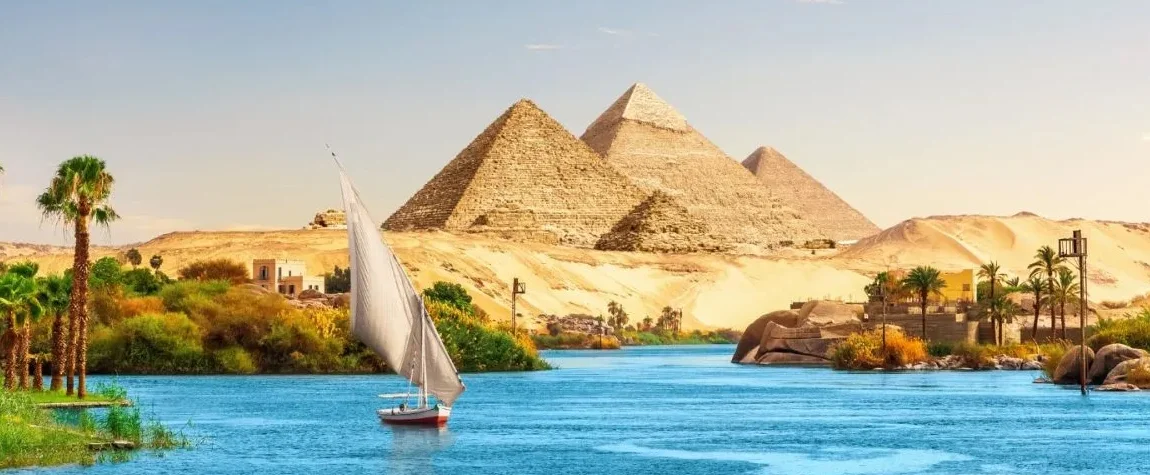







Giza, located on the western outskirts of Cairo, Egypt, is one of the most famous archaeological sites in the world, renowned for its ancient monuments, particularly the Pyramids of Giza and the Great Sphinx. The city is synonymous with ancient Egyptian grandeur and is a testament to the engineering and architectural achievements of one of the world’s oldest civilizations.
The Pyramids of Giza are among the Seven Wonders of the Ancient World and remain a marvel of construction. The Great Pyramid of Giza, also known as the Pyramid of Khufu (or Cheops), is the largest of the three and was originally built as a tomb for the Pharaoh Khufu. Standing at 146 meters (481 feet), it was the tallest man-made structure in the world for over 3,800 years. The pyramid's construction, made of millions of limestone blocks, continues to spark fascination and mystery, with various theories on how it was built.
The other two pyramids are the Pyramid of Khafre, built for Pharaoh Khafre, and the Pyramid of Menkaure, which is the smallest of the three. Khafre’s pyramid is notable for retaining part of its original casing stones at the top and being the site of the Great Sphinx of Giza, an imposing limestone statue with the body of a lion and the head of a pharaoh, believed to represent Khafre himself. The Sphinx stands as a symbol of ancient Egyptian strength, wisdom, and mystery. Its true purpose, along with the extent of its restoration and the legends surrounding it, is still a subject of debate among scholars.
Giza's significance extends beyond its pyramids. The site also includes several smaller tombs and temples associated with the pharaohs and elite individuals of ancient Egypt, providing further insight into the burial practices and religious beliefs of the time. The Solar Boat Museum at Giza houses an ancient solar boat, believed to have been constructed for Pharaoh Khufu and buried alongside him to accompany him in the afterlife.
While the pyramids and Sphinx are the main attractions, Giza is also known for its ongoing archaeological work, where excavations continue to reveal more about ancient Egyptian life, including the discovery of tombs and artifacts. The area has become an essential part of Egypt’s tourism industry, attracting millions of visitors each year who come to witness the grandeur of Egypt’s most iconic landmarks.
In modern times, Giza has grown into a bustling urban area, with sprawling neighborhoods and modern infrastructure. However, the pyramids remain the heart of the city, standing as timeless symbols of Egypt’s ancient civilization. The view of the pyramids from the surrounding desert, especially at sunrise or sunset, is a breathtaking experience and one of the most iconic landscapes in the world.
Despite its modern development, Giza maintains a sense of mystique and reverence, and the region continues to be a center of historical and cultural importance. Whether you are visiting the Giza Plateau for its historical significance or simply marveling at the engineering feats of the ancient world, Giza remains an unforgettable destination that connects the past with the present.
Just follow us on social media, where stories unfold,
Stay with us for moments worth their weight in gold.









SCAN ME

With SECP and FBR registrations, we bring unparalleled expertise to every journey.
Call UsRepresentatives working worldwide ensure a seamless experience wherever you go.
Call UsCustomized tours for Pharmaceuticals, Home Appliances, and Pesticides industries.
Call UsCzech Republic 2-Year Employee Card


Czech Employer Card For 2 Years. Call Us Now for More Details