



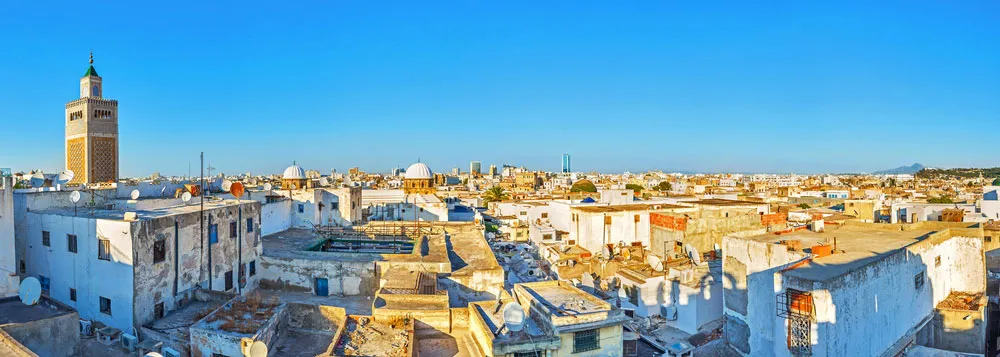








TUNISIA
Embark on a captivating expedition through TUNISIA with Varioline Traveller Travel & Tours.
Experience Tunisia with Varioline Traveller Travel & Tours and immerse yourself in its rich history and vibrant culture. Explore the ancient Carthaginian ruins of Carthage, with its magnificent architecture and fascinating stories. Wander through Tunis's bustling markets, sampling local delicacies and shopping for unique souvenirs. Relax on the Mediterranean's beautiful beaches with crystal-clear waters and golden sands. Our expert guides offer insights into Tunisia's past and present. Whether you're a history buff, nature enthusiast, or beach lover, Tunisia awaits. Book your adventure with Varioline Traveller Travel & Tours for an unforgettable journey.
History of Tunisia:
Tunisia, located in North Africa, boasts a rich and diverse history that spans thousands of years. The region has been inhabited since prehistoric times, with evidence of early human activity dating back to the Paleolithic era. Over the millennia, Tunisia has seen the rise and fall of various civilizations, each leaving a distinct mark on its cultural and historical landscape.
Ancient History:
Tunisia's ancient history is closely tied to the Phoenicians, who established the city of Carthage around 814 BC. Carthage grew into a powerful city-state and empire, dominating the western Mediterranean through trade and military prowess. The Carthaginian civilization reached its peak under leaders like Hannibal, who famously challenged Rome during the Punic Wars.
The Punic Wars (264–146 BC) were a series of conflicts between Carthage and Rome. The eventual defeat of Carthage in the Third Punic War led to its destruction in 146 BC, and Tunisia became part of the Roman Empire. Roman Tunisia, known as the province of Africa Proconsularis, prospered as a key grain supplier and cultural center, with significant cities like Carthage, Dougga, and El Djem.
Islamic and Ottoman Periods
In the 7th century AD, the Arab conquest brought Islam to Tunisia. The region became part of the Umayyad and later the Abbasid Caliphates. The Aghlabids, a semi-autonomous dynasty under the Abbasids, ruled Tunisia in the 9th century, establishing the city of Kairouan as a major center of Islamic learning and culture.
Tunisia experienced various periods of autonomy and control by different dynasties, including the Fatimids, Zirids, and Hafsids. In the 16th century, the Ottoman Empire incorporated Tunisia as a semi-autonomous province, governed by local Beys who maintained considerable power.
French Colonization and Independence:
In the late 19th century, Tunisia became a French protectorate in 1881. The period of French rule brought significant changes to the economy, infrastructure, and social structure of Tunisia. Nationalist movements grew in the early 20th century, leading to increased demands for independence.
Tunisia gained independence from France on March 20, 1956. Habib Bourguiba, a leading figure in the independence movement, became the first President of Tunisia. Bourguiba implemented a series of modernizing reforms, focusing on education, women's rights, and economic development.
Modern Era
In 1987, Zine El Abidine Ben Ali took power in a bloodless coup, ruling until 2011. His regime was marked by economic progress but also by widespread corruption and human rights abuses. The Tunisian Revolution of 2010-2011, part of the Arab Spring, led to Ben Ali's ousting and the establishment of a democratic government.
Tunisia is often hailed as the success story of the Arab Spring, with its peaceful transition to democracy and the adoption of a new constitution in 2014.
Nature:
Tunisia's diverse natural landscapes range from Mediterranean coastlines to vast deserts and mountainous regions. The country is home to a rich variety of flora and fauna, supported by its varied ecosystems.
Mediterranean Coast: Tunisia boasts over 1,300 kilometers of coastline, featuring sandy beaches, rocky cliffs, and picturesque fishing villages. The coastal areas are rich in marine life, making them popular for fishing, diving, and other water activities.
Deserts: The Sahara Desert extends into southern Tunisia, characterized by vast sand dunes, salt flats, and oases. The Chott el Jerid, a large salt lake, is a prominent feature of this arid landscape.
Mountains and Forests: The Atlas Mountains run through northern Tunisia, offering lush forests, fertile valleys, and scenic hiking trails. The Kroumirie Mountains are particularly known for their cork oak forests.
Tunisia's national parks and nature reserves, such as Ichkeul National Park and Boukornine National Park, protect a range of habitats and species, including migratory birds, gazelles, and wild boars.
Geography:
Tunisia is the northernmost country in Africa, bordered by Algeria to the west, Libya to the southeast, and the Mediterranean Sea to the north and east. The country's geography can be divided into three main regions:
Northern Tunisia: This region is characterized by the Atlas Mountains, fertile plains, and a Mediterranean climate. It includes major cities like Tunis, Bizerte, and Sousse.
Central Tunisia: The central part of the country is a transition zone with semi-arid steppes, including the fertile Sahel region, known for its olive groves and agricultural production.
Southern Tunisia: Dominated by the Sahara Desert, this region features arid landscapes, oases, and the impressive Grand Erg Oriental sand dunes.
Tunisia's diverse geography supports a wide range of agricultural activities, from cereal crops and olive groves in the north to date palms and desert agriculture in the south.
People & Culture:
Tunisia has a population of about 12 million people, predominantly Arab-Berber. The official language is Arabic, with French widely spoken due to the colonial past. Tunisian Arabic, or Derja, is the everyday language spoken by most Tunisians.
Tunisian culture is a blend of Arab, Berber, French, and Mediterranean influences. This cultural diversity is reflected in the country's music, art, cuisine, and traditions.
Music and Dance: Traditional Tunisian music includes genres like Malouf (Andalusian classical music), folk songs, and Sufi chants. Modern music incorporates various styles, including rai, rap, and pop.
Art and Craft: Tunisian artisans are renowned for their pottery, mosaics, carpets, and metalwork. The city of Nabeul is famous for its ceramics, while Kairouan is known for its carpets.
Cuisine: Tunisian cuisine is a flavorful mix of Mediterranean and North African influences. Popular dishes include couscous, brik (a stuffed pastry), and harissa (a spicy chili paste). Seafood, olive oil, and spices play a central role in Tunisian cooking.
Religious and cultural festivals, such as Ramadan, Eid, and the Carthage International Festival, highlight the rich cultural heritage of Tunisia.
Atmosphere:
Tunisia offers a warm and welcoming atmosphere, with a unique blend of traditional and modern lifestyles. The capital city, Tunis, is a bustling metropolis with a mix of historic medinas and modern urban areas. The Medina of Tunis, a UNESCO World Heritage site, is a labyrinth of narrow streets, souks, and historic buildings.
Coastal cities like Sousse, Hammamet, and Monastir are popular tourist destinations, known for their beautiful beaches, vibrant nightlife, and luxury resorts. Inland, towns like Kairouan and Tozeur offer a glimpse into Tunisia's rich history and cultural traditions.
Tunisia's climate ranges from Mediterranean in the north to desert in the south, making it an attractive destination year-round.
Most Popular Places:
Carthage:
Carthage, located in present-day Tunisia, was a key ancient city known for its significant influence and trading networks in the Mediterranean. Now a UNESCO World Heritage site, its ruins display impressive architecture and urban planning. Visitors can explore ancient theaters, temples, and residential areas, gaining insight into Carthaginian life and culture. Carthage's historic conflicts with Rome are well-documented, highlighting its power and impact on ancient history. Today, its fascinating history and stunning ruins attract visitors worldwide, eager to learn about this once-great civilization.
Tunis:
Tunis, the capital of Tunisia, is a vibrant destination rich in history, art, and tradition. The UNESCO-listed Medina features narrow alleyways with preserved architecture, busy souks, and cafes serving mint tea. Art lovers should visit the Bardo Museum for its Roman mosaics and artifacts. The city's markets brim with spices, textiles, handicrafts, and local delicacies. From the ancient ruins of Carthage to Mediterranean beaches and a lively street art scene, Tunis offers something for everyone. With its hospitality, cultural heritage, and natural beauty, Tunis is a must-visit destination.
Sidi Bou Said:
Sidi Bou Said, a picturesque village in Tunisia, is famous for its white-and-blue houses lining cobbled streets. This traditional Mediterranean architecture creates a tranquil atmosphere with stunning views of the Mediterranean Sea, making it a favorite for artists and photographers. Its narrow streets feature quaint cafes, art galleries, and boutiques. The renowned Cafe des Nattes offers mint tea with panoramic sea views. Sidi Bou Said is a hidden gem, showcasing Tunisia's rich history and culture while providing a peaceful sanctuary from modern life.
Kairouan:
Located in Tunisia, Kairouan is often referred to as the fourth holiest city in Islam after Mecca, Medina, and Jerusalem. The Great Mosque of Kairouan, built in the 9th century, is one of the most important and well-preserved Islamic monuments in North Africa. The city also boasts a wealth of other historical and religious sites, including mausoleums, madrasas, and traditional markets. Kairouan played a significant role in the spread of Islam in North Africa and is a center of Islamic learning and culture. Visitors can immerse themselves in the city's rich history and explore its ancient architecture, intricate tile work, and ornate calligraphy. The spiritual and cultural significance of Kairouan makes it a must-visit destination for those interested in Islamic history and heritage.
Sousse:
Sousse, in central-east Tunisia, is a coastal city famed for its beautiful beaches, rich history, and lively nightlife. The historic Medina, a UNESCO World Heritage Site, features narrow alleys with traditional buildings, markets, and cafes. Key attractions include the ancient Kasbah walls, the Great Mosque, and the Archaeological Museum. Sousse’s beaches are ideal for relaxation and water sports like snorkeling, diving, and sailing. At night, the city’s vibrant nightlife offers bars, clubs, restaurants, and live entertainment. Sousse caters to those seeking beach relaxation, historical exploration, or nightlife excitement.
El Djem:
El Djem is renowned for its stunning Roman amphitheater, one of the best-preserved worldwide. This ancient site showcases Roman architectural prowess and offers a glimpse into the region's rich history. The amphitheater's impressive size, grandeur, and preservation allow visitors to imagine life during the Roman era. Stepping into it feels like stepping back in time, making El Djem a must-visit for history and architecture enthusiasts. The scale and intricate design details are sure to leave a lasting impression.
Djerba:
Djerba, a stunning island in the Mediterranean Sea off Tunisia's coast, is famous for its pristine beaches with crystal-clear waters and golden sand, making it a favorite for sun-seekers and water enthusiasts. Beyond its natural beauty, Djerba boasts a rich cultural heritage, evident in its traditional Berber architecture and vibrant markets. A key landmark is the historic El Ghriba Synagogue, one of the oldest in the world, celebrated for its architecture and spiritual significance. With beautiful beaches, vibrant culture, and historic sites, Djerba offers something for every traveler.
Tozeur:
Tozeur is a picturesque town in Tunisia that serves as a gateway to the vast Sahara desert. Renowned for its lush palm groves, Tozeur boasts a stunning landscape that has inspired filmmakers and travelers alike. The town is also famous for its traditional architecture, with distinctive mud-brick buildings that give it a unique charm. Furthermore, Tozeur is a paradise for Star Wars fans, as it served as a filming location for scenes set on the desert planet of Tatooine in the iconic film series. Its otherworldly terrain and ancient ruins provided the perfect backdrop for the fictional world created by George Lucas. Overall, Tozeur is a captivating destination that offers a blend of natural beauty, cultural heritage, and a touch of Hollywood magic.
Matmata:
Matmata, a small town in southern Tunisia, is famous for its unique underground troglodyte dwellings. Carved into the desert's soft rock, these homes have sheltered the Berber people from harsh climates and enemies for centuries. Tourists are drawn to Matmata's historical significance and its appearance in pop culture. In the 1970s, George Lucas filmed Star Wars here, using the troglodyte homes for Luke Skywalker's childhood home on Tatooine. This boosted Matmata's profile, making it a must-visit for sci-fi and history fans. Today, visitors can explore the innovative underground homes and the rich Berber heritage.
Cheapest Flight to TUNISIA:
At Varioline Traveller Travel and Tours, we specialize in providing affordable and convenient travel solutions to our valued customers. If you are looking for the cheapest flight to Tunisia, look no further. Our team of experienced professionals will work tirelessly to find you the best deals and ensure a seamless booking process. Whether you are traveling for business or pleasure, trust Varioline Traveller Travel and Tours to make your journey stress-free and enjoyable. Contact us today to book your flight to Tunisia at the best possible price.
Just follow us on social media, where stories unfold,
Stay with us for moments worth their weight in gold.










SCAN ME

With SECP and FBR registrations, we bring unparalleled expertise to every journey.
Call UsRepresentatives working worldwide ensure a seamless experience wherever you go.
Call UsCustomized tours for Pharmaceuticals, Home Appliances, and Pesticides industries.
Call UsCzech Republic 2-Year Employee Card


Czech Employer Card For 2 Years. Call Us Now for More Details