



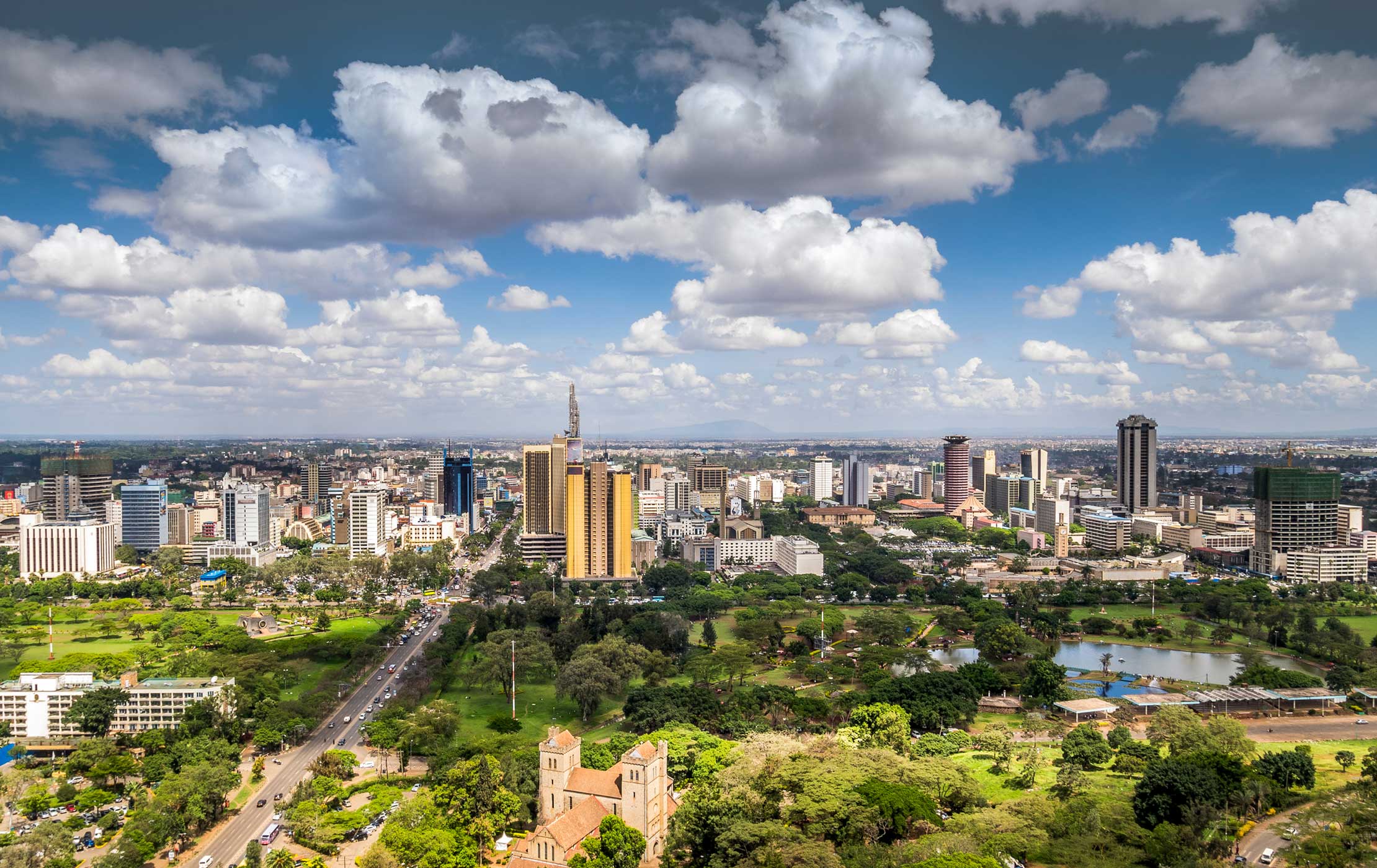







Nairobi, the capital city of Kenya, is a vibrant and dynamic metropolis located in East Africa. Founded in 1899 during British colonial rule as a railway depot for the Kenya-Uganda Railway, the city quickly grew into a commercial and administrative center. Nairobi was officially declared the capital of Kenya in 1907, replacing Mombasa, and over the decades, it has become one of the largest and most influential cities in Africa.
Situated at an altitude of approximately 1,795 meters (5,889 feet) above sea level, Nairobi enjoys a moderate climate with two main rainy seasons, from March to May and from October to December. Its geography, nestled between savannah, forests, and urban development, gives the city a unique character. Nairobi serves as Kenya’s economic powerhouse, with a thriving financial sector and being home to many multinational corporations and international organizations. As East Africa's financial hub, the city is also known for its stock exchange, the Nairobi Securities Exchange (NSE), and its rapidly growing tech scene, particularly the "Silicon Savannah" innovation hub, which has attracted companies like Safaricom and the mobile money platform, M-Pesa.
One of Nairobi’s most remarkable features is its proximity to wildlife. Nairobi National Park, located just a short distance from the bustling city center, is the only national park in the world that exists within the boundaries of a capital city. The park is home to a variety of wildlife, including lions, giraffes, zebras, and rhinos, offering a striking contrast between urban development and nature. In addition to the national park, Nairobi is home to other nature reserves and conservation centers like the Giraffe Centre and the David Sheldrick Wildlife Trust, which focuses on elephant and rhino conservation.
The city is a melting pot of cultures, with diverse communities including Kikuyu, Luo, Luhya, Maasai, and many others, alongside expatriates and international visitors. Nairobi's cultural scene is lively and varied, with a rich tradition of theater, music, and art. The city is home to institutions such as the National Museum of Kenya, the Karen Blixen Museum, and the Bomas of Kenya, all of which highlight the country's rich heritage, history, and artistic traditions. Nairobi’s arts scene is continually evolving, with new movements in street art and contemporary performance art, and its music scene is particularly notable for the influence of Afrobeat, hip hop, and reggae.
Tourism plays a significant role in Nairobi's economy, as it serves as a major entry point for visitors heading to Kenya’s renowned safari destinations, such as Maasai Mara, Amboseli, and Tsavo National Parks. Tourists visiting Nairobi can explore various attractions within the city, including the Nairobi Railway Museum, Nairobi Railway Station, and the Nairobi National Park, or enjoy the scenic beauty of areas like the Ngong Hills and Karen. Nairobi’s status as a hub for wildlife tourism, combined with its cosmopolitan atmosphere, makes it a popular destination for travelers from around the world.
Nairobi's transport infrastructure is key to its status as a regional hub. The city is served by Jomo Kenyatta International Airport (NBO), one of the busiest airports in Africa, which connects Kenya to the rest of the world. The city is also working on expanding its public transport network, with buses, matatus (shared taxis), and a commuter rail system all serving the population. Nairobi is undergoing significant infrastructural improvements, including the construction of modern roads, bridges, and the development of a metro system that will ease congestion in the future.
Despite its growth and development, Nairobi faces challenges typical of rapidly expanding cities. Issues such as traffic congestion, inadequate public services, and inequality are common in different parts of the city. Nairobi also struggles with pollution, waste management, and informal settlements (slums) where large portions of the population live in poor conditions. However, the city is also making efforts toward addressing these issues, with government and non-governmental organizations working on sustainability projects, waste management initiatives, and the provision of affordable housing.
Nairobi plays a significant role in global diplomacy, particularly with its status as the hub for international environmental organizations. It is home to the United Nations Environment Programme (UNEP) and the United Nations Office at Nairobi (UNON), making it a key center for international discussions on environmental conservation, climate change, and development. Nairobi is also a prominent player in the African Union’s work on trade, security, and regional cooperation.
Looking toward the future, Nairobi is poised to continue its growth and development. With major infrastructure projects underway, a booming technology sector, and a growing middle class, the city is well-positioned to become one of the leading cities in Africa. Its role as a center for innovation, finance, and education, coupled with its unique mix of urban life and wildlife, ensures that Nairobi will remain a vital and influential player on the African continent for years to come.
Just follow us on social media, where stories unfold,
Stay with us for moments worth their weight in gold.






SCAN ME

With SECP and FBR registrations, we bring unparalleled expertise to every journey.
Call UsRepresentatives working worldwide ensure a seamless experience wherever you go.
Call UsCustomized tours for Pharmaceuticals, Home Appliances, and Pesticides industries.
Call UsCzech Republic 2-Year Employee Card


Czech Employer Card For 2 Years. Call Us Now for More Details